
National Institute of Mass Communication & Journalism, Ahmedabad
( Affiliated to Gujarat University )
( Affiliated to Gujarat University )


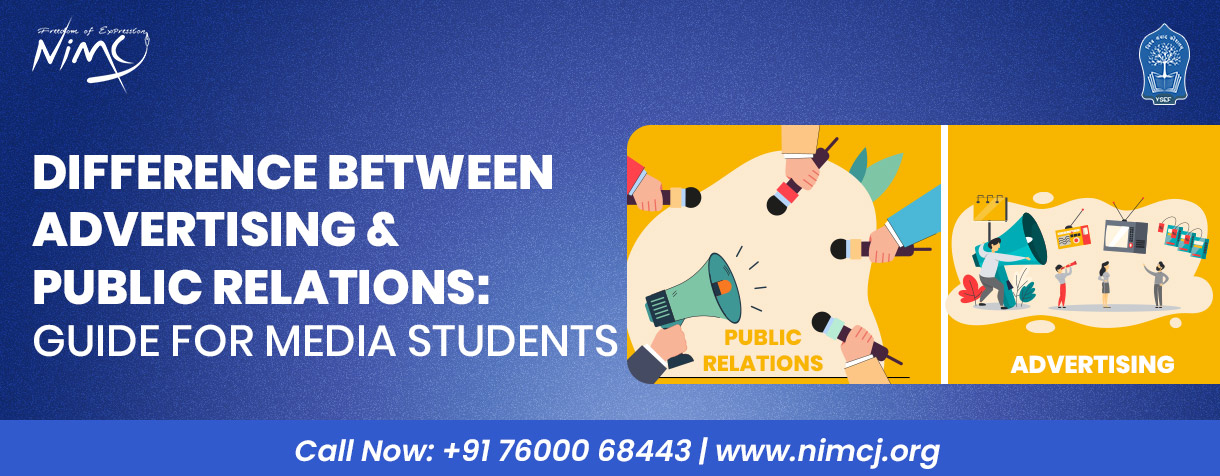
In today’s communication-driven world, brands rely heavily on two powerful tools to build their identity and influence the public: Advertising and Public Relations (PR). Though both aim to shape perception, increase visibility, and support business goals, they differ significantly in their strategies, purposes, messaging, and approaches.
For students pursuing careers in journalism, mass communication, advertising, or corporate communication, understanding the difference between advertising and public relations is essential. This knowledge helps you choose the right specialization, whether you see yourself developing creative ads or managing a company’s reputation.
Let’s break it down in simple terms with practical examples.
Advertising is a paid form of communication used by brands to promote products, services, or ideas. Advertisers choose the message, platform, timing, and target audience - making it a controlled form of communication.
Key Features of Advertising:
Example:
If Airtel launches a new prepaid plan and wants quick visibility, it pays for ad spots on TV, YouTube, Instagram, and newspapers. The message is crafted to encourage users to buy the product.
Public Relations is the strategic management of communication between an organization and its audiences. Unlike advertising, PR focuses on earning trust and building long-term relationships through credible communication.
Key Features of Public Relations:
Example:
If Tata Group wins an award for sustainability, their PR team sends press releases to media outlets. Journalists may publish the story because it is newsworthy, not because Tata paid for it.
| Aspect | Advertising | Public Relations |
| Type of Communication | Paid promotion | Earned or managed publicity |
| Control | Full control over the message | Limited control once the media covers it |
| Goal | Drive sales, brand recall | Build image, trust, credibility |
| Tone | Persuasive, creative | Informative, factual, reputation-focused |
| Duration | Short-term campaigns | Long-term strategic communication |
| Cost | Often expensive | Usually, cost-effective |
| Channels | Paid ads across media | Press releases, events, interviews, PR campaigns |
Students pursuing advertising courses or public relations courses must understand these differences early, because:
Both fields offer strong career opportunities in India’s growing media ecosystem.
India has one of the world’s largest advertising markets, growing across digital, television, print, and outdoor platforms. Students trained in advertising courses learn:
Advertising roles include Copywriter, Creative Strategist, Media Planner, Brand Manager, Digital Advertising Specialist, and more.
Public Relations is one of the most respected and in-demand communication fields. Those studying PR at a Public Relations Institute develop skills such as:
PR roles include PR Executive, Corporate Communications Officer, Media Relations Manager, Reputation Manager, and Crisis Communications Specialist.
Advertising Example::
The “Kya Aapke Toothpaste Mein Namak Hai?” campaign by Colgate uses persuasive messaging and paid placements across multiple media platforms to boost brand preference.
PR Example::
Infosys announcing quarterly results or CSR initiatives through press conferences or media statements — not ads — is a classic PR strategy to build trust and transparency.
Choose Advertising if you like:
Choose PR if you enjoy:
At NIMCJ, students get exposure to both fields before choosing their specialization.
NIMCJ is one of the best mass communication colleges in India, offers a comprehensive BAJMC (Hons.) program designed for the future:
What you learn:
With expert faculty, newsroom simulations, real-world projects, and strong industry connections, NIMCJ prepares students for successful media careers.
While advertising focuses on promoting products through paid messages, public relations builds a lasting reputation through strategic communication. Both are vital in today’s media landscape, and each demands a unique set of skills and expertise.
A strong understanding of these fields not only broadens career opportunities but also helps students navigate the interconnected world of branding, media, and communication.
Your journey into advertising or public relations begins here. Apply Now for Admission: Quick Registration
Read Next Blog: How Media Shapes Public Perception of Crime in India: Myths vs Reality
18 Dec 2025
Post by : NIMCJ