
National Institute of Mass Communication & Journalism, Ahmedabad
( Affiliated to Gujarat University )
( Affiliated to Gujarat University )


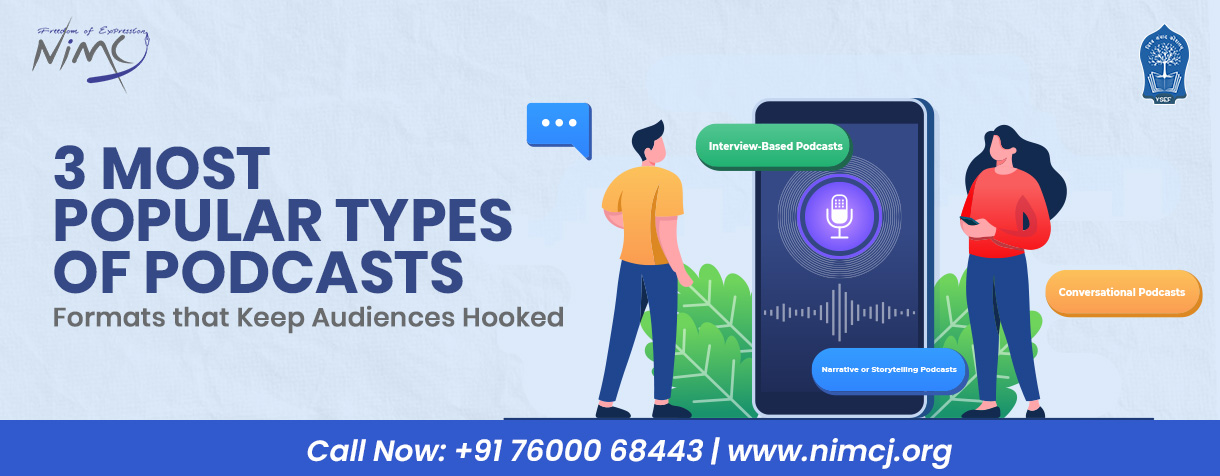
Podcasts have become one of the most powerful storytelling and content platforms of the 21st century. Whether it’s for learning, entertainment, or staying updated, millions of people now tune into podcasts regularly. For aspiring media professionals and journalism students, understanding podcast formats is essential to both creating and analyzing compelling audio content. Let's dive into the three most popular types of podcasts, their structure and why they work so well.
The most popular types of podcasts are interview-based podcasts, narrative/storytelling podcasts, and conversational/co-hosted podcasts. These formats resonate widely because they are versatile, engaging, and easy to produce across genres like business, entertainment, education, and lifestyle. Each format has its unique structure, tone, and audience appeal, making them a staple in the podcasting industry.
Interview podcasts are among the most widely recognized formats. In this structure, a host (or hosts) interviews guests who are experts, celebrities, influencers, or everyday people with a unique story. These episodes can be pre-recorded or live and are often structured around specific themes or industries.
Why It Works: Interview formats bring diverse perspectives, allow knowledge sharing, and are relatively easy to plan. Each new guest introduces the podcast to a different audience segment.
Examples:
Who Should Try This: Students interested in journalism, public relations, or hosting can practice this format to hone their interviewing and presentation skills.
An interview podcast features one or more hosts interacting with a guest, exploring their experiences, insights, and opinions on specific topics. This format is highly engaging, especially when the questions are well-researched and the guest brings fresh perspectives to the conversation.
Narrative podcasts are structured like audio documentaries. They use storytelling techniques, sound design, and scripting to present compelling stories. These may be fiction or non-fiction and often unfold over multiple episodes.
Why It Works: Storytelling podcasts are immersive and emotionally engaging. They captivate listeners through detailed narration, music, and sound effects. This format is perfect for investigative journalism, historical retellings, or true crime series.
Examples:
Who Should Try This: Ideal for media students interested in scriptwriting, editing, and audio production. These podcasts require a good sense of pacing, research, and storytelling structure.
A storytelling podcast presents a scripted or semi-scripted narrative, often enhanced with music and sound effects. This format draws the listener into a well-crafted tale, with structured arcs, tension-building, and a clear beginning, middle, and end. It is often used in genres like true crime, history, and fiction.
Conversational podcasts involve two or more hosts discussing topics in a free-flowing manner. These podcasts often sound like casual conversations and are popular in genres like lifestyle, comedy, entertainment, and pop culture.
Why It Works: The chemistry between hosts makes this format engaging and relatable. Listeners feel like they are part of a friendly chat, which builds a loyal community. It's also one of the easiest formats to produce with minimal scripting.
Examples:
Who Should Try This: Great for students interested in voice modulation, group dynamics, and casual content formats. It also helps improve interpersonal communication skills.
A conversational podcast features two or more people casually discussing a topic without strict scripting. The informal tone, spontaneity, and real-time reactions create a sense of connection with the audience. It's ideal for comedy, lifestyle, or talk-show style formats.
In the world of mass communication, knowing how to produce or analyze different podcast formats gives students a competitive edge. From storytelling techniques to sound editing and guest handling, each podcast format teaches a unique set of skills. For aspiring media professionals, podcasts are also a low-investment way to build a personal brand, share opinions, or showcase creativity.
To start a podcast, you'll need basic audio editing skills, a good microphone, clarity in speech, topic research, and content planning. For interview and storytelling podcasts, strong communication, scripting, and editing are essential. As you grow, branding, marketing, and consistency will play a vital role in audience building.
India is witnessing a surge in podcast consumption, especially in metros and among younger audiences. From regional storytelling and cultural commentary to politics and tech, Indian podcasters are exploring a wide range of themes. Institutions like NIMCJ in Ahmedabad are integrating podcast production into their mass communication curriculum to prepare students for this evolving medium.
Students are encouraged to create their podcasts as part of their coursework, using professional equipment and software under the guidance of faculty who have real-world media experience.
As one of the leading media institutes in India, NIMCJ (National Institute of Mass Communication & Journalism) equips students with hands-on skills in radio production, podcast creation, and digital media storytelling. With advanced studios, real-time editing software, and industry-driven mentorship, students graduate ready to make their mark in the growing podcast industry.
16 Jun 2025
Post by : NIMCJ