
National Institute of Mass Communication & Journalism, Ahmedabad
( Affiliated to Gujarat University )
( Affiliated to Gujarat University )


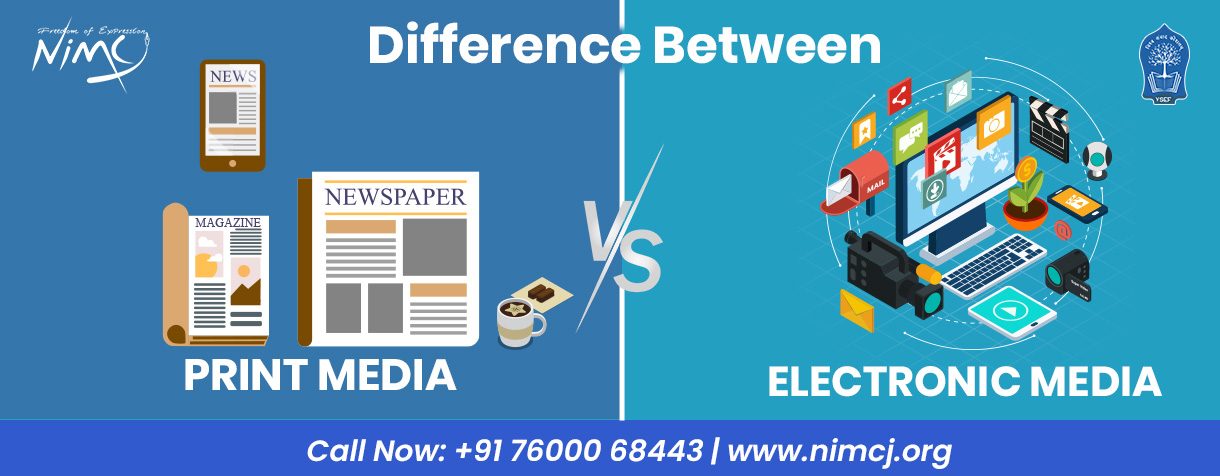
In the ever-evolving landscape of mass communication, understanding the difference between print media and electronic media is crucial for aspiring journalists, content creators, and media professionals. Both forms play an integral role in how information is created, distributed, and consumed. Whether you aim to become a reporter, anchor, content strategist, or media researcher, knowing the distinctions between these two types of media will help you choose the right career path.
Let’s explore the meaning, examples, advantages, and key differences between print and electronic media to help you make an informed decision about your future in the media industry.
Print media refers to the traditional form of mass communication that involves printed materials for disseminating information. It includes:
Print media is tangible and offline, meaning readers interact with physical materials. It has been a trusted source of news, analysis, and storytelling for centuries.
Also Read: 10 Types of Print MediaElectronic media uses electronic or digital technology to distribute content through platforms like
It’s dynamic, faster, and interactive, often providing real-time updates and multimedia experiences (audio, video, text).
Here’s a side-by-side comparison to understand how these two forms of media differ:
| Feature | Print Media | Electronic Media |
| Format | Physical (paper-based) | Digital/electronic (TV, radio, internet) |
| Reach | Limited by geography | Global and instant |
| Speed | Slower (due to printing/distribution) | Instant updates and live streaming |
| Cost of Access | Requires purchase or subscription | Often free or included with internet access |
| Interactivity | Static | Interactive (comments, likes, shares) |
| Best For | In-depth analysis, long-form writing | Live news, visuals, entertainment |
| Examples | The Times of India, India Today Magazine | NDTV, Aaj Tak, YouTube, Instagram Live |
Both media types offer unique benefits and career options. Your choice depends on your interests and skills:
Choose Print Media if:
Choose Electronic Media if:
Many successful journalists today work across both formats, adapting their storytelling style to suit the medium.
At the National Institute of Mass Communication and Journalism (NIMCJ), Ahmedabad, we train students in both traditional and modern media through a comprehensive BAJMC (Hons.) program.
Whether you aim to work with The Hindu or become the next big face on NDTV, NIMCJ equips you with the skills, exposure, and confidence to thrive.
Understanding the difference between print media and electronic media is vital for anyone pursuing a career in journalism or mass communication. While print offers depth and credibility, electronic media provides speed, interactivity, and reach. Both are powerful tools in shaping public opinion and delivering stories that matter.
Tip: The future of journalism lies in being versatile. Learning both media gives you a competitive edge in the evolving world of media.
18 Jul 2025
Post by : NIMCJ